North Dakota Architectural Photography That Gets Your Work Noticed
A completed building is only half the story. The other half is making sure the right people can see it — clearly, convincingly, and at its best.
Foltz Photo· Harrison Foltz· Minot, ND
A building can look impressive in person and still fall flat online. The design might be excellent. The materials carefully chosen. The finished space completely worth showing off. But if the photos are dark, poorly framed, or just don’t capture what makes it special, potential clients may scroll right past it.
That’s the problem professional architectural photography solves — and for businesses across North Dakota, it’s more relevant than ever. Whether you’re a contractor wrapping up a commercial build in Minot, a developer presenting a property in Bismarck, or a business owner who just renovated your retail space, the right photos help people understand your work before they ever pick up the phone.
Why Building Photography Matters More Than Most People Realize
Architecture is visual by nature. Written descriptions can tell someone a project was carefully designed and well-built. Photography can actually show them. There’s a real difference between those two things — especially for clients who are weighing their options and haven’t met you yet.
Strong commercial property photography communicates things that words struggle to:
- The actual scale and layout of a building
- Interior finishes, materials, and design details
- How natural light moves through a space
- Exterior character and the surrounding environment
- Craftsmanship and construction quality
- How the space functions in real use
- The relationship between the building and its site
- Atmosphere that photos capture, descriptions can’t
When someone visits your website or reviews a proposal you’ve sent, they’re forming an impression fast. Good photography makes sure that impression reflects the actual quality of your work.
“Your website is often the first place a potential client looks. Professional building photography gives them a reason to keep reading — and a reason to reach out.”
Who Actually Uses Architectural Photography in North Dakota
The range of businesses that benefit from professional building and property photography is wider than most people expect. It’s not just architects. It’s anyone whose work involves physical spaces that need to be seen to be understood.
If your business involves a physical space or a built project, professional photography can make that space work harder for you — on your website, in proposals, and anywhere else you need to make a strong first impression.
The Details Are Where the Story Lives
Good building photography isn’t just about photographing a structure from the front and calling it done. The most compelling images are often found in the details — a custom entrance, the way light falls across a finished floor, the texture of materials, the relationship between indoor and outdoor space.
A professional photographer knows how to find those moments and frame them in a way that makes visual sense. That’s what separates a useful portfolio from a collection of snapshots.
It also means the photos you end up with tell a fuller story. Not just “here’s the building” — but here’s what went into it, what makes it work, and why it’s worth your attention.
Have a Project Worth Showing Off?
Foltz Photo works with contractors, developers, and businesses across North Dakota to photograph their spaces the right way.
See Commercial Photography Get a QuoteOne Photo Shoot. A Lot of Places to Use the Images.
One of the practical things about professional architectural photography is how far a single session can go. The images from one shoot can support your business across multiple channels — which makes the investment go a lot further than it might first seem.
Here’s where those photos typically end up being used:
- Your website homepage and project pages
- Project portfolio and case studies
- Proposals and client presentations
- Social media content
- Company brochures and printed materials
- Email marketing campaigns
- Advertising and paid media
- Trade show displays
- Google Business Profile
- Press and media coverage
You’re not paying for a set of photos that live in one place. You’re building a library of original visual content your business can keep using. That matters whether you’re a contractor putting together a bid, a developer marketing a property, or a business owner refreshing your brand presence.
For businesses in North Dakota thinking about the broader picture, it’s worth reading about how professional photography builds trust with local customers — because that trust often starts with what someone sees before they ever meet you.
Aerial Photography Adds a Dimension Most Ground Shots Can’t
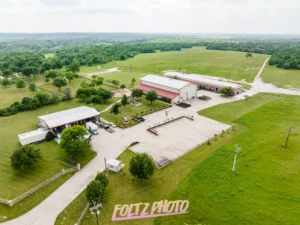
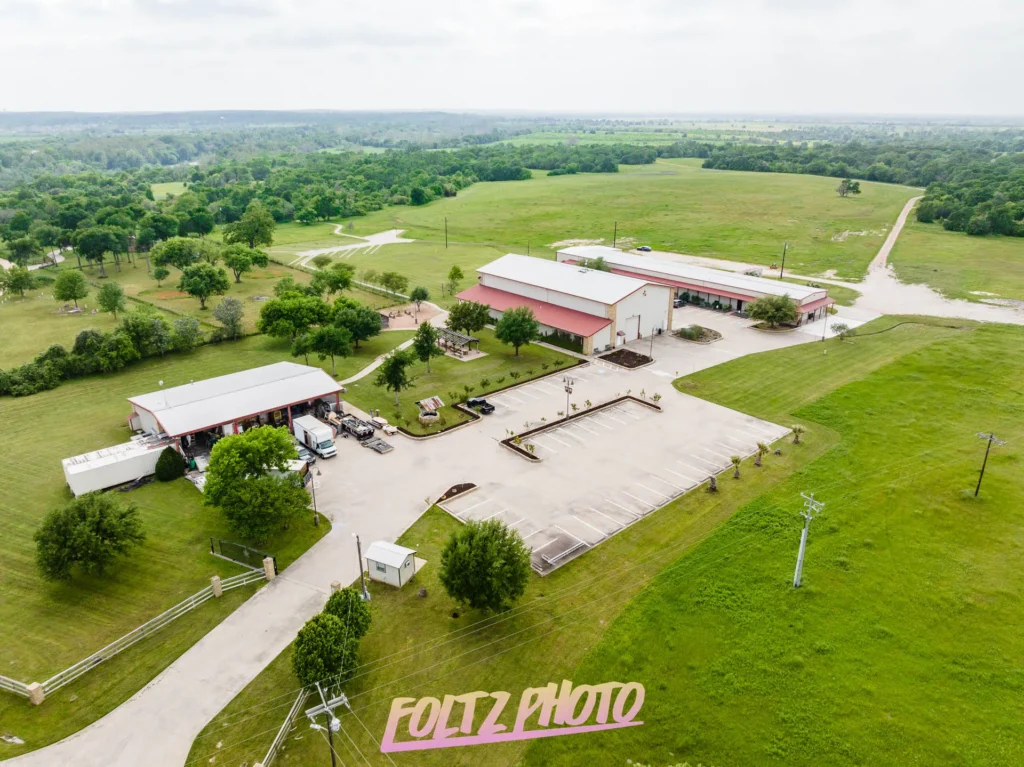
Some buildings and sites just don’t photograph well from the ground. Large industrial facilities, commercial developments on expansive lots, construction sites mid-project, or properties where the relationship to the surrounding land is part of the appeal — all of these benefit from images captured from above.
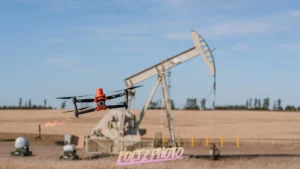
Harrison Foltz is an FAA Part 107 certified drone pilot, which means aerial imagery is part of what Foltz Photo can offer alongside traditional building photography. Drone shots can show the full footprint of a structure, the context of a site, or progress across a large construction area in a way that ground-level photography simply can’t match.
If your project involves scale, site context, or a bird’s-eye view that tells a different story than what’s visible from the street, explore aerial photography services to see how it fits into the mix.
For contractors specifically, combining ground-level architectural shots with aerial overviews gives you two different perspectives on the same project — and a much stronger story for proposals, case studies, and marketing materials. You can also read more about why North Dakota contractors are using drone photography to document and market their work.
Ground Level + Aerial, All in One Session
Foltz Photo can combine architectural photography with FAA-certified drone coverage so you get the complete picture of your project.
View Aerial ServicesArchitectural Photography Is a Better Investment Than Stock Photos
Stock photography has its place, but it can’t show your actual project, your actual building, or your actual team’s work. When someone visits your website and sees original images of what your company has built, it feels different. More credible. More specific.
That specificity matters especially for companies selling expertise. An architect doesn’t want a generic photo of a building — they want potential clients to see their design work. A contractor doesn’t want to show someone else’s project — they want to demonstrate what their crew can actually deliver. A developer wants prospective buyers to see the real property, not a stock photo that looks like it could be anywhere.
Professional photography makes all of that possible. And when it’s done well, it becomes one of the strongest marketing assets your business has.
This connects to something broader — the idea that brand photography for North Dakota businesses should reflect the actual character of the business, not a polished version of something generic. The same principle applies to architectural and property photography: the goal is to capture what’s real, and make it look as good as it actually is.
Architectural Photography That Supports the Full Project Story
Sometimes the completed building isn’t the entire story worth telling. A finished commercial construction project represents months of planning, coordination, and skilled work. Showing the finished result alongside images from earlier phases can give clients and prospective customers a much stronger sense of what your company is capable of.
For construction companies, drone photography during the construction process can document progress across the life of a project. Those images can later anchor a case study, support a proposal, or fill out a portfolio page that shows the full arc of the work — not just the finished product.
Similarly, for manufacturers and industrial operations, industrial photography in North Dakota can help communicate the scale and capability of your facilities in a way that written descriptions simply can’t.
The point is to think beyond a single image of the final building. Think about the complete visual story — and what it says about your business to someone who hasn’t worked with you yet.
“The best building photography doesn’t distract from the structure. It helps people notice it, understand it, and remember it.”
North Dakota Has Plenty of Architecture Worth Documenting
North Dakota has a wide range of commercial, industrial, residential, and institutional architecture. Modern commercial developments in Bismarck and Fargo. Large-scale industrial facilities across the Bakken region. Retail and hospitality spaces throughout Minot. Agricultural infrastructure spread across the state.
Every one of those projects has a visual story worth capturing — and the challenge is doing it in a way that feels accurate, natural, and polished. Lighting conditions shift throughout the day. Weather affects exterior shoots. Large buildings can be hard to photograph without losing their sense of scale. Interiors require careful attention to perspective and light. All of that calls for a photographer who knows what they’re doing — not someone figuring it out on the job.
Foltz Photo is based in Minot and works across North Dakota, from the Bakken to Bismarck and Fargo. Whether you need commercial building photography, interior documentation, or a combination of ground and aerial coverage, the work is grounded in understanding what North Dakota businesses actually need from their photography — not just what looks good in theory.
If you’re not sure what type of photography makes the most sense for your project, this overview of what commercial photography covers is a good starting point.
More Worth Reading
Your Building Deserves to Be Seen at Its Best
Foltz Photo works with contractors, developers, architects, and businesses across North Dakota. Let’s talk about your project.
Start a Conversation