The short version
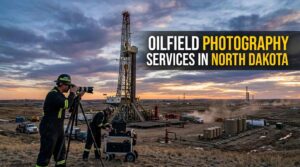
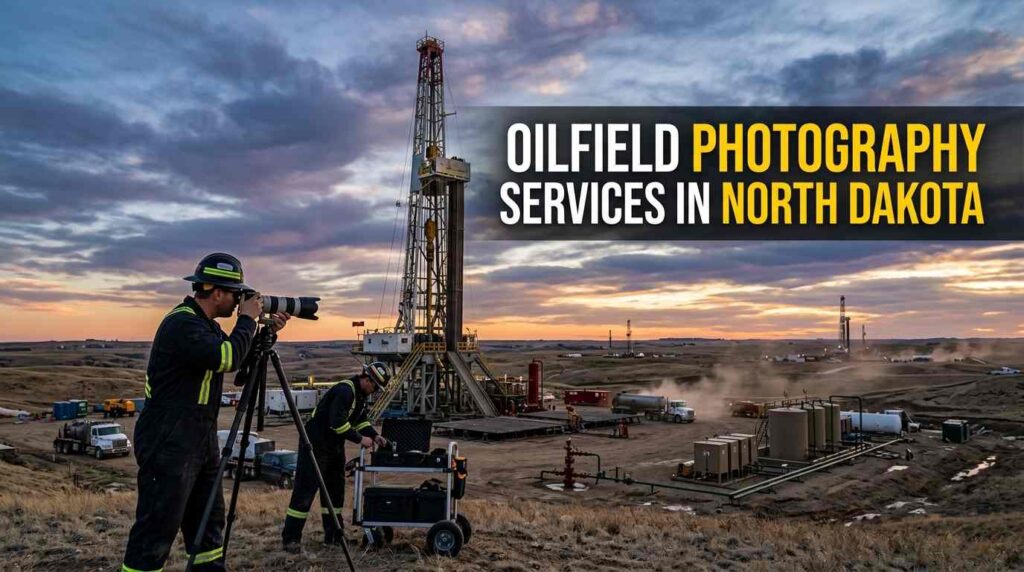
Oilfield photography covers well pads, rigs, pipelines, processing sites, and the people who run them. A good North Dakota oilfield photographer handles site safety rules, flies drones legally, and delivers files that suit your reports, website, and recruiting. Cost depends on how many sites you need, how far apart they are, and whether you add aerial work.
Why energy companies hire a photographer
Phone photos work for a quick field update. They fall short when the images need to go in front of investors, landowners, regulators, or future hires.
Professional images do real work across a company:
- Reports and investor decks. Clear photos of operating assets back up the numbers on the page.
- Site records. Dated images show how a pad, pipeline route, or facility looked at a point in time.
- Hiring. Real crew and equipment photos beat stock images on a careers page.
- Landowner and community relations. Clean, well-kept sites photograph well and tell their own story.
- Marketing and bids. Service companies win contracts faster when prospects can see the work.
Our post on why oil and gas companies in the Bakken trust Foltz Photo covers how we work with operators and service firms in the region.
What gets photographed on an oilfield shoot
Most requests fall into a handful of subjects across the Williston Basin. Here is what we are usually asked to capture.
Drilling rigs and well pads
Wide views of the rig and pad layout, plus detail shots of equipment and crews at work.
Tank batteries and production facilities
Organized, readable images of storage, separators, and metering, often used for records and reports.
Pipelines and midstream
Right-of-way, compressor stations, and gas processing sites, usually best shown from the air.
People and crews
Portraits and action shots for recruiting, safety campaigns, and leadership pages.
Trucking, yards, and service equipment
Fleet and shop photos that help service companies show capacity to new customers.
Energy work in North Dakota is not only oil. If your company also runs turbines, read our take on photography for wind energy companies in North Dakota.
Ground photos vs. drone photos
Most oilfield projects use both. Each one answers a different question.
Ground photography
- Shows equipment detail and condition
- Works well for crews and portraits
- Fits tight spaces and indoor shops
- Less affected by wind
Aerial photography
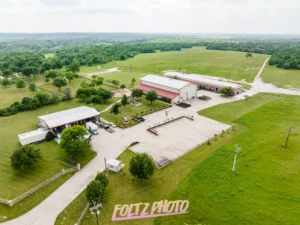
- Shows the full pad, roads, and surroundings
- Covers pipelines and large facilities fast
- Gives a clear before-and-after record
- Needs a certified pilot and site approval
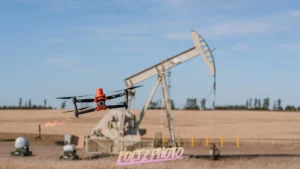
Drone work over an active site needs two things: an FAA Part 107 remote pilot certificate and permission from the operator. Harrison Foltz holds the Part 107 certification, and our aerial photography and drone services page explains how we plan flights.
If you manage large footprints, see how drone photography documents large industrial sites. The same approach carries over to wide oilfield facilities.
Site access and safety: what to sort out first
Oilfield sites have their own rules, and they differ from one operator to the next. The photographer needs to know them before arriving, not at the gate.
Share these items up front:
- Exact site locations and the best route in
- A named contact who can approve access on the day
- Required safety orientation, PPE, and any online training
- Areas that cannot be photographed, such as proprietary equipment or restricted zones
- Whether crew members need to sign photo releases
- Any flight restrictions for drone work
Tip: Ask the photographer to confirm in writing that they can meet your site requirements. It saves a wasted drive across the Bakken.
Good prep also makes the day run smoothly for your own team. Our guide to preparing for a photo shoot in North Dakota has a checklist you can adapt for field crews.
Best time of year to shoot
North Dakota light and weather change a lot through the year, and both affect the photos.
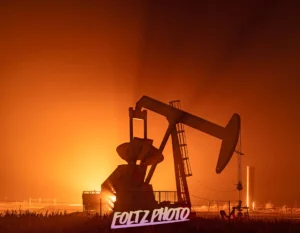
Late spring through early fall gives the easiest road access and long evenings. Golden-hour light makes steel, tanks, and prairie look their best.
Winter can produce striking frost and low, warm sun. It also brings cold, wind, and rough roads, so build extra time into the schedule.
Wet spring weeks can make lease roads hard to travel. If your deadline is tight, book early and keep a backup date open.
For ideas on working with the seasons, see our notes on seasonal landscape photography in Minot and beyond.
What you should receive
Agree on deliverables before the shoot. A clear list avoids surprises later.
- Edited, full-resolution images ready for print and web
- Web-sized versions for your site and social channels
- A clear file naming system tied to site or well name
- Aerial stills and, if needed, short video clips
- Written usage rights that match how you plan to use the images
- A fixed delivery date, with a quick preview set if you are on deadline
Looking for ongoing records? A repeat visit schedule gives you a dated image history of each site. The idea works the same way as drone photography for construction project tracking.
What affects the price
There is no single rate for oilfield photography. These factors move the number most.
- Number of sites. Several pads in one day costs less per site than one remote visit.
- Travel distance. Williston, Watford City, Tioga, and Stanley are close to each other. A trip from elsewhere in the state adds time.
- Aerial work. Drone flights add planning, flight time, and editing.
- People and portraits. Crew shoots take more coordination than equipment shots.
- Turnaround. Rush delivery costs more than a standard schedule.
- Licensing. Wider usage rights can change the quote.
Our photography pricing list is a good starting point, and the breakdown in drone photography cost in North Dakota explains what drives aerial pricing.
How to choose an oilfield photographer
Look for a photographer who understands industrial work, not just pretty pictures. Ask these questions before you book.
- Have you photographed energy or industrial sites in North Dakota?
- Do you hold an FAA Part 107 certificate for drone work?
- Can you meet our site safety and orientation requirements?
- What is included in the price, and what usage rights come with it?
- How fast can you deliver, and in what format?
- Can you share a portfolio of similar projects?
Industrial work is a core part of what we do. Read how industrial photography helps manufacturers win more contracts in North Dakota, then learn more about the Foltz Photo team. If you are new to the field, what commercial photography is is a quick primer.
How to plan your shoot
Follow these steps and your first shoot will go smoothly.
- Decide what the images are for. A recruiting page, an investor report, and a site record each need different shots.
- List your sites. Group them by location so the photographer can cover more in each trip.
- Send your safety and access rules. Include contacts, training, and no-photo areas.
- Pick a shooting window. Pair a good weather forecast with a backup date.
- Agree on deliverables and a delivery date. Put file types, usage rights, and timing in writing.
Based in Minot, we travel across the Bakken and the rest of the state. Need coverage near the capital? See our Bismarck photographer page. Working on the eastern side? Visit our Fargo photographer page. Or start from the Foltz Photo homepage to see the full range of work.
Common questions about oilfield photography
How much does oilfield photography cost in North Dakota?
It depends on the number of sites, travel distance, aerial work, turnaround, and licensing. A day covering several nearby pads costs far less per site than a single remote location. Send your site list for an accurate quote.
Can a drone fly over an active well site?
Yes, with the right approvals. The pilot needs an FAA Part 107 certificate, and the site operator must give permission and share any flight restrictions.
What should I send a photographer before the shoot?
Site locations, an on-site contact, safety and orientation requirements, no-photo zones, the purpose of the images, and your deadline.
How long until I get the finished photos?
It varies by project size. Agree on a delivery date before the shoot, and ask for a fast preview set if you are working to a deadline.
What is the best season for oilfield photography?
Late spring through early fall is easiest for access and daylight. Winter gives dramatic light, but plan for cold, wind, and road conditions.
Keep reading
Ready to photograph your sites?
Tell us where your sites are, what the images are for, and when you need them. We will reply with a clear plan and quote.